Since 2019, the COPD Comprehensive Care Program at WashU Medicine and Barnes-Jewish Hospital has cared for patients with chronic obstructive pulmonary disease (COPD) from diagnosis through the most advanced therapies.

Under the direction of Rodrigo Vazquez Guillamet, MD, the program gives patients access to specialists in complex lung disease within one connected program. Every patient’s experience with COPD is unique. Although COPD is often linked to smoking, up to 30% of patients with COPD have never smoked. Genetics and childhood asthma can contribute to lung damage, as can repeated respiratory infections and long-term exposure to air pollution. Two patients with the same lung function may have very different symptoms and needs. For this reason, the program begins by determining where each patient is in the course of the disease. Specialists then connect patients with the treatments most likely to improve both quality of life and survival.
Services include state-of-the-art diagnostics with detailed CT imaging of the lungs and airways, along with pulmonary rehabilitation. Quantitative CT (qCT) analysis can measure lung damage that pulmonary function tests may miss and helps guide decisions about further treatment. Some patients benefit from biologic therapies chosen with the help of blood markers. For selected patients with emphysema, the program offers lung volume reduction procedures, including bronchoscopic approaches. When disease progresses despite these treatments, patients are evaluated by the Lung Transplant Program, where about 30% of transplants are performed for COPD. Because COPD specialists and transplant physicians work side by side, transplantation is considered one of several treatment options rather than an isolated last step.
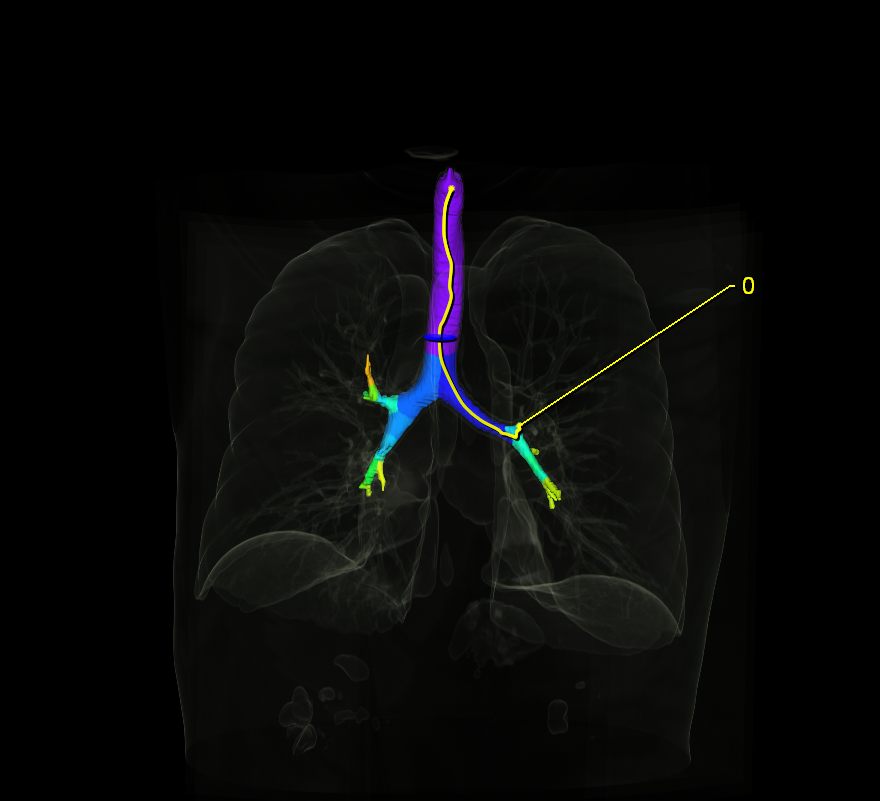


Three images derived from chest computed tomography (CT) scans demonstrate advanced imaging techniques used to evaluate lung structure, airway anatomy, vascular integrity, and emphysema. Click any image to view an enlarged version.
The program also works to connect hospital care with long-term outpatient care. When a patient is hospitalized, the multidisciplinary CARE Team uses evidence-based pathways built directly into the electronic health record. A hospital stay for COPD is treated as an opportunity to review medications and refer patients to pulmonary rehabilitation. Patients are also assessed for additional therapies and scheduled for close follow-up after discharge, with the goal of preventing future admissions.

Members of the program are engaged in research to find COPD earlier and help patients live better with the disease. Through clinical trials, patients can also get early access to emerging therapies, even when other treatment options are limited. Current projects explore whether lung cancer screening CT scans can reveal early COPD and whether computer tools in the electronic health record can identify patients who have not yet been diagnosed. The team is also studying whether patients who use supplemental oxygen can walk farther by pushing it on a wheeled cart instead of pulling a tank. The program is also expanding care for patients with alpha-1 antitrypsin deficiency, an inherited condition that can damage both the lungs and the liver and is the most common known genetic cause of COPD. The condition is often overlooked, and many people live with symptoms for years before a simple blood test identifies it. In collaboration with hepatology specialists, the program is developing a dedicated Alpha-1 Antitrypsin Clinic, where lung and liver specialists will work together to coordinate each patient’s diagnosis and long-term care.
Together, these efforts share one goal: helping every patient live longer and get back to the things that matter most to them. Even with advanced COPD, there is reason for hope.